

What is the principle behind making a functional jacket windproof, waterproof and breathable? What is the testing method?
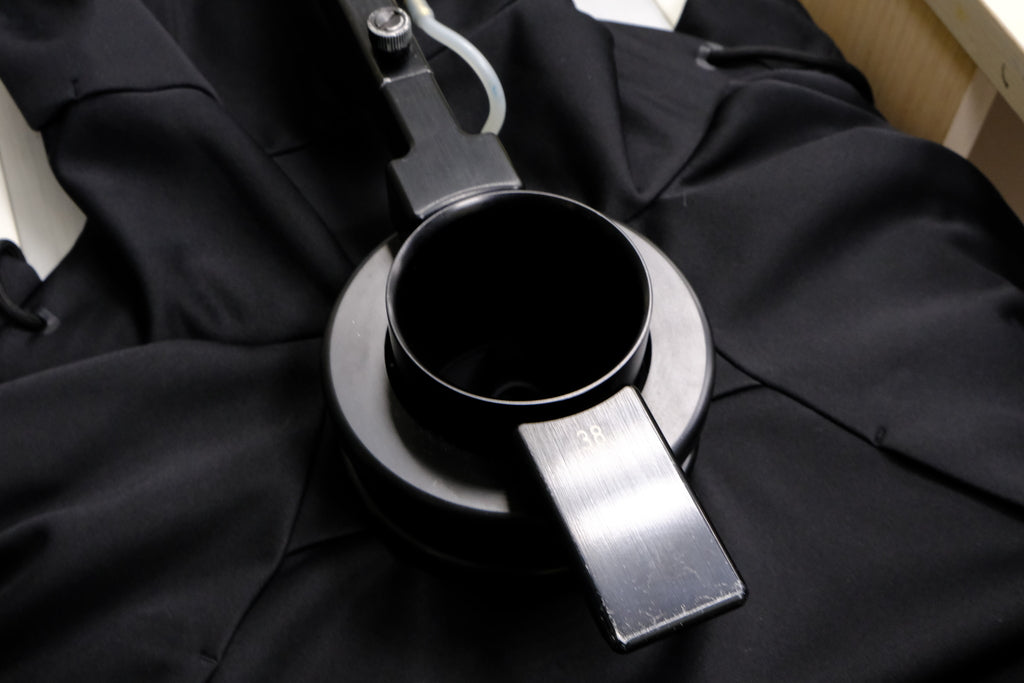
Before learning about functional apparel, I always wondered: how can a jacket be windproof, waterproof, and breathable at the same time? It seemed contradictory that these functional properties could coexist, yet they allow for the creation of a jacket that is both windproof and "breathable." Today, we will take you through the principles behind this coexistence and how such performance is tested.
Windproof, Waterproof, and Breathable
Wind resistance measures air permeability, while moisture permeability measures the passage of water vapor; the two do not conflict. Fabric density, fibers, and finishing methods all affect air permeability, while a waterproof-breathable membrane blocks liquid water while allowing water vapor to pass through. DWR (Durable Water Repellent) treatment helps water beads slide off the outer fabric, which is different from the function of a waterproof membrane.
〔Further reading: Learn to distinguish between "waterproof" and "water-repellent"!〕
 So, how do we solve the issue when a fabric has high density and good wind resistance, but poor breathability?
Let’s start from the basics: why do we sweat in a raincoat? It’s because the sweat vapor released by the body during physical activity cannot escape, causing condensation inside the garment, which leads to a cold, clammy, and uncomfortable feeling. When outdoor professionals or enthusiasts talk about "breathable" performance jackets, they are actually referring to moisture permeability. "Air permeability" and "moisture permeability" are completely different concepts; moisture permeability is the process of transferring vapor from the skin to the outside to achieve cooling and maintain comfort and dryness..
Waterproof-breathable membranes come in different designs: microporous membranes use tiny pores to transmit water vapor, while non-porous hydrophilic membranes use the material's hydrophilicity to pass water vapor. Both can be used to balance waterproofing and moisture permeability. Actual performance is also influenced by fabric construction, internal/external temperature and humidity differences, and activity intensity. When purchasing, it is more important to verify the test methods and data for a specific product rather than just looking at the name of the membrane.
Standard Testing
Air Permeability
There are many test methods for air permeability, such as ASTM D737 (US), ISO 9237 (EU), JIS L1096 (Japan), and more. Most measure the rate of airflow: under specific pressure conditions, air flows from the high-pressure side through the fabric to the low-pressure side. The airflow rate can be measured directly or calculated by determining the pressure drop across the flow aperture, and the air permeability of the fabric is defined by this airflow speed.
ASTM D737 is the standard test for the air permeability of textiles. When comparing values, you must also confirm the test pressure differential, area, and reporting units. Under identical conditions, a lower value indicates that less air passes through the fabric. This is different from moisture permeability tests that measure water vapor passage, and these two types of values cannot be used interchangeably.
 Taking the originally featured Ultra Hoodie as an example, the original data recorded an ASTM D737 test value of 1.74 CFM, demonstrating its low-air-permeability windproof design, which reduces the influx of cold wind.
Moisture Permeability

By creating a specific humidity differential on both sides of the fabric, water vapor passes through the sample into the dry side. By measuring the change in weight of the moisture-permeability cup over time, parameters such as the water vapor transmission rate of the sample are determined. There are usually two test methods: upright cup and inverted cup.
The original Ultra Hoodie mentioned in this article uses the JIS L 1099 A-1 calcium chloride method. In this test, a calcium chloride desiccant is placed in the moisture-permeability cup, covered and sealed with the sample, and placed in a controlled temperature and humidity environment for a specified time. The water vapor transmission rate is then calculated based on the weight change. The common unit is g/m²/24h, which represents the amount of water vapor that passes through per square meter in 24 hours; it does not represent the penetration of liquid sweat.
The original data for the Ultra Hoodie recorded a moisture permeability of 12,029.7 g/m²/24h, demonstrating its ability to transmit water vapor while maintaining a windproof structure. This article retains the data from the historical model; when comparing current products, please refer to the same test methods and conditions, and do not directly rank values from different methods like A-1 or B-1.
References for principles and testing: ASTM D737, BOKEN’s JIS L 1099 A-1 explanation, Principle of non-porous hydrophilic membranes. Principle references do not imply that the products in this article use these specific brand membrane materials.
Conclusion
The comfort of a functional jacket comes from the combination of windproofing, waterproofing, and moisture permeability. For daily commuting, prioritize wind resistance, water repellency, and tailoring; for continuous rain, skiing, or similar scenarios, verify the waterproof construction and layering insulation. When engaging in high-intensity activities, don't forget to use vents and moisture-wicking base layers.
Explore current hoodies and everyday apparel from our Urban Tech Wear collection, or learn about protective outer shells and insulation layers from the Alpine/DuoLayer collection.
Explore Urban Tech Wear
TRANZEND
Facebook: Tranzend Taiwan
Instagram: tranzend_taiwan
Email: sales@tranzend.co.uk


@吳文源 我們有做防潑水的西裝褲哦~
衣服到處買的到,有沒有做褲子?
Leave a comment